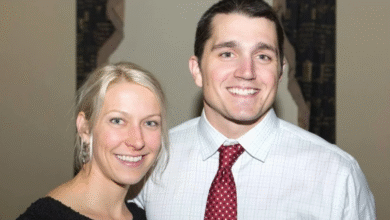
Jack Schlossberg, grandson of President John F. Kennedy, combines a storied heritage with modern ambition—through Yale and Harvard credentials, writing and media engagement, and a fresh public-service vision.


Early Life and Family Legacy
Born in New York City on January 19, 1993, Jack Schlossberg enters the world as the youngest child of Caroline Kennedy and Edwin Schlossberg. He carries the full name John Bouvier Kennedy Schlossberg, reflecting his maternal grandfather’s legacy. Growing up on Manhattan’s Upper East Side, Jack Schlossberg was surrounded by both private privilege and the public weight of a famed family name. His upbringing meant that the story of his grandfather, President John F. Kennedy, and grandmother Jacqueline Kennedy Onassis was never far away. Yet from a young age Jack Schlossberg also sensed that being part of the Kennedy-Schlossberg lineage came with expectations—and possibilities.
That family legacy offers two sides: opportunity and scrutiny. For Jack Schlossberg, it meant access to institutions, mentors, and cultural capital, but it also meant that his personal choices would inevitably be compared to the mythos around the Kennedy family. Rather than shy away from it, Jack Schlossberg seems to have accepted the inheritance of history, while simultaneously seeking a path of his own. The Kennedy name opens doors and draws attention—but Jack Schlossberg’s story is less about riding coattails and more about carving a personal identity within a storied tradition.
His parents created a home environment that balanced public service and creative independence. His mother’s role as ambassador, author and public figure provided a model of civic engagement; his father’s background in design, art and creativity gave a complementary vantage point. Jack Schlossberg thus grew up with the sense that legacy wasn’t a burden alone but a springboard—provided one used it thoughtfully. As he matured, Jack Schlossberg found himself navigating that interplay between inherited history and his own evolving ambitions.
Education and Formative Years
Jack Schlossberg attended the Collegiate School in Manhattan for his early schooling, where he was immersed in an environment of high academic standards and civic awareness. His teenage years also featured early forays into public life: internships in Washington, D.C., service as a Senate page, and co-founding a nonprofit initiative focused on energy-efficient lighting in low-income housing. These experiences allowed Jack Schlossberg to glimpse governmental, organizational and grassroots efforts far earlier than many of his peers.
For his undergraduate studies Jack Schlossberg enrolled at Yale University. He graduated in 2015 with a Bachelor of Arts in History, concentrating on Japanese history. This choice of specialization underscored that Jack Schlossberg was not content merely to ride on heritage—he pursued an area of study requiring deep scholarship and focus. At Yale he was known for more than just being a Kennedy descendant: he engaged in editing student publications, co-founded initiatives, and explored performance and humor, indicating a multifaceted interest in public engagement, media and civic discourse.
After his time at Yale, Jack Schlossberg advanced to Harvard University, where he pursued the joint degrees of Juris Doctor and Master of Business Administration, completing both by 2022. By 2023 he passed the New York State bar exam. These credentials reflect a serious investment in the tools of law, policy, business and leadership. For Jack Schlossberg, the education path was not simply about acquiring titles—it was about readiness for a role that melded public service, professional competence and modern communication. His formative years thus laid a foundation of scholarship, service and self-expression, preparing Jack Schlossberg to engage with public life on his own terms.
Early Career and Media Engagement
Upon graduation from Yale, Jack Schlossberg embarked on an international chapter by working in Tokyo. He joined the e-commerce firm Rakuten and also spent time with the Japanese company Suntory, immersing himself in global business and cultural contexts. This chapter illustrated Jack Schlossberg’s willingness to look beyond the American political epicenter and acquire real-world experience in the business and communications sphere. These early career steps convey that Jack Schlossberg views public service as not only domestic—but global, interconnected and contemporary.
Back in the United States, Jack Schlossberg began contributing to major publications, writing on politics, public policy and culture. He demonstrated an ability to blend historical awareness (drawing from his family’s legacy) with fresh commentary on current affairs. His voice in the media has been described as approachable yet informed, allowing Jack Schlossberg to transcend the simple role of “Kennedy heir” and become an active commentator in his own right.
In 2024, Jack Schlossberg expanded his media presence by joining a major fashion-and-culture magazine as a political correspondent. This role signaled something interesting: that Jack Schlossberg doesn’t just live in the corridors of power—he recognizes the significance of culture, lifestyle, and narrative in shaping public discourse. His work in media illustrates a broader view of public service—one that embraces not only legislation and policy but also communication, engagement and influence. In all these early career moves, Jack Schlossberg presents as someone consciously fusing the weight of legacy with modern versatility.
Personal Interests and Character Profile
Beyond the public and official roles, Jack Schlossberg has developed personal interests that round him out as both real and relatable. He is an avid paddle-boarder, sharing the experience of navigating Manhattan’s waterways—an activity that reminds us that for Jack Schlossberg the world is not just about boardrooms and policy sessions, but real physical engagement and cityscape connection. His willingness to share such moments reveals an openness and humility that help anchor Jack Schlossberg in a more grounded identity.
His social media presence also reflects a blend of humor, authenticity and self-awareness. Where many public figures guard every statement, Jack Schlossberg navigates with a measure of lightness: embracing memes, sharing behind-the-scenes glimpses and acknowledging that the media environment is different for his generation. This approach suggests that Jack Schlossberg does not see legacy as rigid and sacrosanct—but rather as something to be lived genuinely while adapting to new cultural norms.
Character-wise, Jack Schlossberg appears to balance tradition and innovation. He honors the ideals of public service and civic responsibility that the Kennedy family embodies—but he also insists on his individuality. That means owning mistakes, experimenting with voice, collaborating across disciplines and not waiting passively for doors to open. It means that Jack Schlossberg is shaping a personal identity that is both informed by history and responsive to a rapidly changing world.
Political Vision and Public Service Ambitions
For Jack Schlossberg, public service isn’t an afterthought—it is foundational. His family’s political heritage naturally leads to high expectations, but Jack Schlossberg has embraced the notion that service evolves. He has spoken about generational change: how issues like climate, technology, social media, equity and global interconnection are reshaping what civic leadership means. He views his role not as simply repeating old scripts, but as applying timeless values—like courage, integrity and public-mindedness—to new terrain.
Jack Schlossberg has publicly indicated interest in electoral politics. He formed an exploratory committee for a congressional run and announced his candidacy for a U.S. House seat in 2026 representing a New York district. This declaration signals that Jack Schlossberg is ready to translate commentary into action. His vision emphasizes bridging generations, engaging with young voters, leveraging digital platforms, and making government more transparent and responsive. For Jack Schlossberg, the aim is not merely “running for office” but redefining how legacy figures participate in modern democracy.
At the same time, Jack Schlossberg’s political perspective appears deliberately grounded. He emphasizes grassroots engagement—meeting people where they are, listening first, avoiding elitism, and rejecting the notion that a famous name alone suffices. He has critiqued what he sees as performative politics, and advocated for authenticity, substance and accountability. In his view, public service for Jack Schlossberg means being both symbol and operational actor—able to mobilize behind ideas while remaining rooted in lived community concerns.
Influence of Heritage and the Weight of Expectations
Being the only grandson of President John F. Kennedy places Jack Schlossberg in a unique position within American public life. On the one hand, the Kennedy legacy offers enormous cultural capital—doors open, audiences listen, history counts. On the other hand, legacy carries expectations: comparisons to his grandfather, scrutiny over every action, a public narrative constantly in motion. Jack Schlossberg has repeatedly acknowledged this tension, noting the importance of embracing his lineage while forging an independent path.
The weight of expectation might be daunting, but Jack Schlossberg treats it as a challenge rather than a burden. He recognizes that the legacy gives him platform, but platform demands purpose. He also understands that his generation lives in a vastly changed world—digital, global, fragmented—and therefore the way he serves will differ from how his grandfather did. For Jack Schlossberg, legacy is not a script to reproduce, but a starting line.
His awareness of this dynamic comes through in his writing and public speaking: he often reflects on how history matters, how values carry forward, but how the tools of leadership must evolve. Jack Schlossberg doesn’t shy from the Kennedy name; he uses it as context—but he aims for relevance. In that sense he becomes not just the heir of a family, but a bridge between past ideals and future possibilities.
Leadership Style and Communication Approach
Jack Schlossberg’s style combines traditional solemnity with modern informality. He understands the gravity of public service, yet he is comfortable mediating through popular culture, social media, and conversation formats that his generation uses. His communication is less about polished speeches and more about authenticity—sharing backstage moments, speaking plainly, acknowledging both strengths and uncertainties. That mixture makes Jack Schlossberg accessible, while still projecting seriousness.
From a leadership perspective, Jack Schlossberg seems oriented toward collaboration rather than top-down diktats. He emphasizes listening, partnership, and building consensus rather than broadcasting from a pedestal. This approach reflects a larger trend in generational leadership—less command-and-control, more networked and participatory. Jack Schlossberg embodies this by engaging with activists, digital communities, cultural influencers and policy experts alike.
Furthermore, Jack Schlossberg demonstrates a willingness to engage with issues beyond the conventional political toolkit. His interest spans business, media, international affairs, climate, technology and communications. That breadth suggests he sees the role of a public figure not as one-dimensional, but multi-dimensional. For Jack Schlossberg, leadership includes telling stories, shaping culture, mentoring others, building platforms—and not simply winning elections.
Major Achievements and Milestones
Among the notable milestones in Jack Schlossberg’s life: completing a history degree at Yale focused on Japanese history; earning a joint JD/MBA at Harvard; passing the New York State bar exam; working internationally in Japan; writing for major publications on politics and culture; joining a high-profile media outlet as a political correspondent; and announcing a run for Congress in 2026. Each of these steps reflects both ambition and preparation in the trajectory of Jack Schlossberg.
His entrepreneurship in youth—such as founding a nonprofit to install energy-efficient lighting in low-income housing—reveals early commitment to action. Similarly, his internship experiences in Washington showed early interest in policy and public life. Rarely does someone with such a distinguished family background invest so clearly in the grind of competence and skill-building. Jack Schlossberg’s path is thus less about inherited privilege and more about applied preparation.
In the public eye, Jack Schlossberg has also become a voice for a younger generation of voters: someone who can speak legacy, but also speak 2020s language. His media roles and commentary show that he doesn’t wait for permission—he participates. As he moves toward electoral politics, his past achievements give him a foundation but also a platform to propose new ideas. That mixture of legacy and fresh momentum is central to how Jack Schlossberg is being positioned—and how he positions himself.
Challenges and Criticisms
Of course, the path of Jack Schlossberg is not without challenges. Being a member of a famous family means heightened scrutiny. Some observers question whether his name affords too much advantage; others wonder if the legacy overshadows personal merit. Jack Schlossberg must constantly negotiate the perception of being “the Kennedy simply because of his birth” versus being “Jack Schlossberg because of his own work.”
Moreover, public expectations for the Kennedy name have historically been enormous—so any misstep is amplified. For Jack Schlossberg, balancing youthfulness, authenticity and gravitas is a tightrope. Critics may argue he is operating in privilege and needs to demonstrate that his work transcends valedictory lineage. Jack Schlossberg himself acknowledges the double-edged nature of his background, and seeks to temper it with genuine service.
Additionally, electoral politics in the twenty-first century bring their own complexities: changing demographics, media fragmentation, social-media scrutiny, activist impatience, and evolving norms. For Jack Schlossberg, embracing a legacy means also navigating these modern dynamics—and doing so while remaining grounded and responsive. The challenge is not merely to inherit a name, but to translate the ideals of that name into contemporary results. That is the test of Jack Schlossberg.
What Sets Jack Schlossberg Apart
Among the many known members of the Kennedy family, what distinguishes Jack Schlossberg is his willingness to blend tradition with modern communication, his cross-disciplinary training (history, law, business, media), and his comfort with cultural as well as political influence. Rather than purely political ambition, Jack Schlossberg seems to view public service as encompassing many forms—legal, business, cultural, digital and activist.
His international experience, media literacy, youthful energy and focus on listening positions Jack Schlossberg as a bridge: between generations, between legacy and future, between institutions and grassroots. Many heirs to historical families live in the past; Jack Schlossberg appears to live toward the future. He respects the weight of the past but is actively shaping how it might matter for tomorrow. This blend of reverence and reinvention makes Jack Schlossberg stand out.
Additionally, Jack Schlossberg’s personal approach—being candid about mistakes, using humor, engaging in real work rather than merely symbolic gestures—gives him credibility. In an era when public figures are judged for authenticity as much as ambition, his ethos resonates. Whereas some legacy figures may rest on their pedigree, Jack Schlossberg seems intentionally to build his own credentials, his own voice, his own trajectory.
The Road Ahead: Vision and Opportunities
Looking ahead, Jack Schlossberg’s announced candidacy for the U.S. House in a New York district marks a significant step forward. It suggests that he is ready to act—not simply observe. If successful, his trajectory may parallel that of his grandfather—but in a context vastly changed by technology, demographics and culture. For Jack Schlossberg, the opportunity is to translate the ideals of the Kennedy name into solutions for today’s challenges: climate change, economic inequality, digital governance, and generational equity.
Because Jack Schlossberg is trained in law and business, communicates well in media, and is comfortable in cultural spaces, his who-do-what profile differs from traditional politicians. He may be well placed to lead initiatives that cross public policy, business transformation and civic innovation. The opportunity for Jack Schlossberg is to become a modern public-service voice—someone who speaks both to legacy and to the next generation.
Of course, the road ahead holds uncertainties. Electoral campaigns are unpredictable; public opinion shifts fast; the very notion of legacy is being re-evaluated in our age. For Jack Schlossberg, success will depend on his ability to remain grounded, responsive and results-oriented. If he can avoid being defined solely by his name and instead be defined by his actions, the vision he has laid out becomes plausible. The next chapter of Jack Schlossberg’s story is not just about where he comes from—but about where he chooses to lead.
Table: Timeline of Major Milestones
| Year | Milestone | Significance |
|---|---|---|
| 1993 | Birth of Jack Schlossberg in New York City | Marks the latest generation of the Kennedy line |
| 2015 | Graduated from Yale with BA in History | Demonstrated academic seriousness and focus |
| 2022 | Earned JD/MBA from Harvard | Equipped with law and business credentials |
| 2023 | Passed New York State bar exam | Validated his legal training and readiness |
| 2024–2025 | Engaged in media roles and announced exploratory committee for Congress | Shift from commentary toward electoral politics for Jack Schlossberg |
Frequently Asked Questions
What motivates Jack Schlossberg’s public service ambitions?
Jack Schlossberg often cites the combination of his family’s tradition of service and his belief that the current era demands new voices and methods. He views public service as evolving—requiring not just policy knowledge but cultural awareness, media fluency and global perspective. His motivation stems from wanting to merge his heritage with his generation’s realities.
How does Jack Schlossberg balance legacy and personal identity?
Jack Schlossberg acknowledges that his heritage opens doors but doesn’t guarantee purpose. He emphasizes rigorous credential-building, real world experience and communication rooted in authenticity. He expresses a desire to be seen not only as “Kennedy’s grandson” but as Jack Schlossberg—someone who contributes on his own terms, while respecting the legacy he carries.
What issues does Jack Schlossberg prioritize?
While Jack Schlossberg has not articulated a full policy platform yet, his past commentary and roles suggest priorities including climate action, clean energy, intergenerational equity, global business integration, media & communication reform, and engaging younger voters. He aims to connect tradition with innovation.
What distinguishes Jack Schlossberg from other legacy figures?
Many legacy figures lean into symbolism; Jack Schlossberg invests in substance. He holds serious educational credentials, works internationally, writes publicly, engages in media and is running for office. His blend of law, business, commentary and modern culture sets him apart. He appears less about inheriting a brand and more about creating a relevant voice.
Is Jack Schlossberg primarily a media personality or a politician?
Jack Schlossberg currently straddles both worlds. His media engagement (writing, commentary, correspondent role) has sharpened his public communication skills. Meanwhile, his decision to run for Congress shows political ambition. He seems to view media and politics not as separate, but as complementary arenas for public impact. For him, the future may mean integrating both.
Conclusion
Jack Schlossberg stands at a unique crossroads of history and possibility. With the Kennedy legacy behind him, he carries both the weight of expectation and the freedom to reinvent what legacy means. Through rigorous education, global experience, media savvy and a budding political path, Jack Schlossberg is not simply resting on heritage—he is consciously shaping how the next chapter of that heritage unfolds. The story of Jack Schlossberg is still being written; what matters most now is not where he comes from, but where he chooses to go—and how he chooses to lead.